

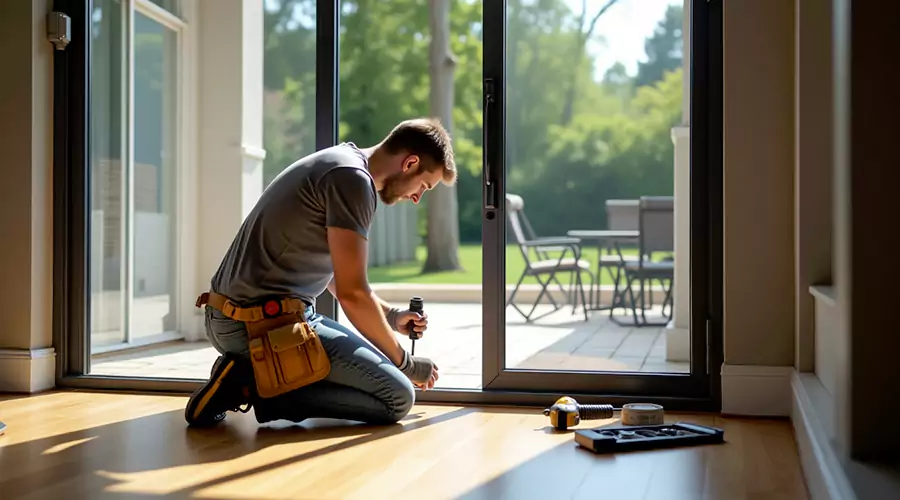

A sliding glass door should move smoothly with minimal effort. When it becomes difficult to open or close, it can quickly turn into a daily frustration. Many homeowners assume the problem is simply old age, but several issues can affect the performance of a sliding patio door. From dirty tracks and worn rollers to alignment problems and structural shifts, identifying the cause is the first step toward restoring smooth operation.
Understanding why your sliding glass door is hard to open can help you address minor issues before they lead to costly repairs or complete door replacement. In many cases, routine sliding glass door maintenance can prevent common problems and help keep the door operating smoothly for years.
How a Sliding Glass Door Works?
A sliding glass door operates using rollers that move along a track. These components work together to allow the door to glide smoothly from side to side.
Main Components of a Sliding Door
- Glass door panel
- Upper and lower tracks
- Roller assemblies
- Door frame
- Locking mechanism
- Weatherstripping
When any of these components become damaged, dirty, or misaligned, the door may become difficult to operate.
Dirty or Obstructed Tracks
One of the most common reasons a sliding glass door becomes hard to open is debris buildup in the track.
Common Track Obstructions
- Dirt and dust accumulation
- Pet hair and debris
- Small stones or leaves
- Insect nests or buildup
Over time, debris creates resistance that prevents the rollers from moving freely.
Signs of Dirty Tracks
- Grinding noises during operation
- Jerky movement
- Increased effort required to slide the door
- Visible dirt inside the track
Regular cleaning can often restore smooth movement.
Worn or Damaged Rollers
Rollers are responsible for carrying the weight of the sliding door while allowing it to move effortlessly.
How Rollers Wear Out?
- Continuous daily use
- Exposure to moisture and humidity
- Corrosion or rust formation
- Lack of maintenance
As rollers deteriorate, they may stop rotating properly, causing the door to drag across the track.
Symptoms of Bad Rollers
- Door feels unusually heavy
- Rough movement when opening
- Scraping sounds along the track
- Door sticks at certain points
Worn rollers are one of the most common causes of difficult door operation.
Lack of Lubrication
Sliding door components require proper lubrication to function efficiently.
Areas That Benefit From Lubrication
- Roller assemblies
- Track surfaces
- Locking mechanisms
- Moving hardware components
Without lubrication, friction increases and makes the door harder to move.
Warning Signs
- Squeaking noises
- Stiff movement
- Increased resistance while sliding
Using the correct lubricant helps reduce wear and improve performance.
Bent or Damaged Tracks
The track serves as the pathway for the door rollers. If the track becomes damaged, smooth movement becomes difficult.
Causes of Track Damage
- Heavy impacts
- Improper installation
- Continuous roller wear
- Accidental bending during maintenance
Even a small dent can interfere with roller movement.
Signs of Track Damage
- Door catches in specific areas
- Uneven movement
- Visible bends or dents
- Rollers jumping off track
Damaged tracks often require professional repair or replacement.
Misaligned Sliding Door
Over time, a sliding door can shift out of alignment.
Causes of Misalignment
- House settling
- Loose hardware
- Worn roller adjustments
- Improper installation
When alignment changes, the door may no longer sit correctly within the track.
Common Symptoms
- Uneven gaps around the frame
- Difficulty locking the door
- Dragging along the track
- Door rubbing against the frame
Proper adjustment often resolves alignment issues.
Weather and Moisture Damage
Environmental conditions can affect sliding glass doors over time.
Effects of Moisture Exposure
- Rust on metal components
- Swollen wooden frames
- Corrosion of rollers and hardware
- Mold and mildew buildup in tracks
Humidity and water exposure can gradually make the door more difficult to operate.
Worn Weatherstripping
Weatherstripping helps seal the door against drafts and moisture. As it ages, it can become damaged or displaced.
Problems Caused by Worn Weatherstripping
- Increased friction during operation
- Drafts entering the home
- Difficulty closing the door completely
- Reduced energy efficiency
Replacing damaged weatherstripping can improve both door function and insulation.
Structural Movement Around the Door Frame
In some cases, the problem is not the door itself but the surrounding structure.
Possible Structural Causes
- Foundation settling
- Frame warping
- Improper installation
- Moisture damage around the opening
Structural changes can affect the door's alignment and make operation difficult.
Signs of Structural Issues
- Cracks near the door frame
- Uneven spacing around the door
- Difficulty locking and unlocking
- Persistent sticking despite maintenance
These issues often require professional evaluation.
How to Maintain a Sliding Glass Door?
Regular maintenance helps prevent most common sliding door problems.
Maintenance Tips
- Clean tracks regularly
- Remove debris from rollers
- Lubricate moving parts as recommended
- Inspect weatherstripping for damage
- Check roller adjustments periodically
- Address minor issues before they worsen
Routine care can significantly extend the lifespan of your sliding glass door.
When to Call a Professional?
While some issues can be resolved with basic maintenance, others require expert attention.
Consider Professional Service If
- The door remains difficult to move after cleaning
- Rollers are damaged or broken
- Tracks are bent or severely worn
- Structural movement is affecting alignment
- The door no longer locks properly
Professional repairs help ensure safe operation and prevent further damage.
Final Thoughts on Hard-to-Open Sliding Glass Doors
A sliding glass door that is difficult to open is usually a sign that something within the system needs attention. Dirty tracks, worn rollers, lack of lubrication, misalignment, and structural issues are among the most common causes.
The good news is that many of these problems can be identified early through regular inspections and maintenance. Addressing issues promptly helps restore smooth operation, improves energy efficiency, and extends the life of the door.
By understanding the causes behind a hard-to-open sliding glass door, homeowners can keep their patio doors functioning safely and efficiently for years to come.
 Reviews
 (523)
(523)